


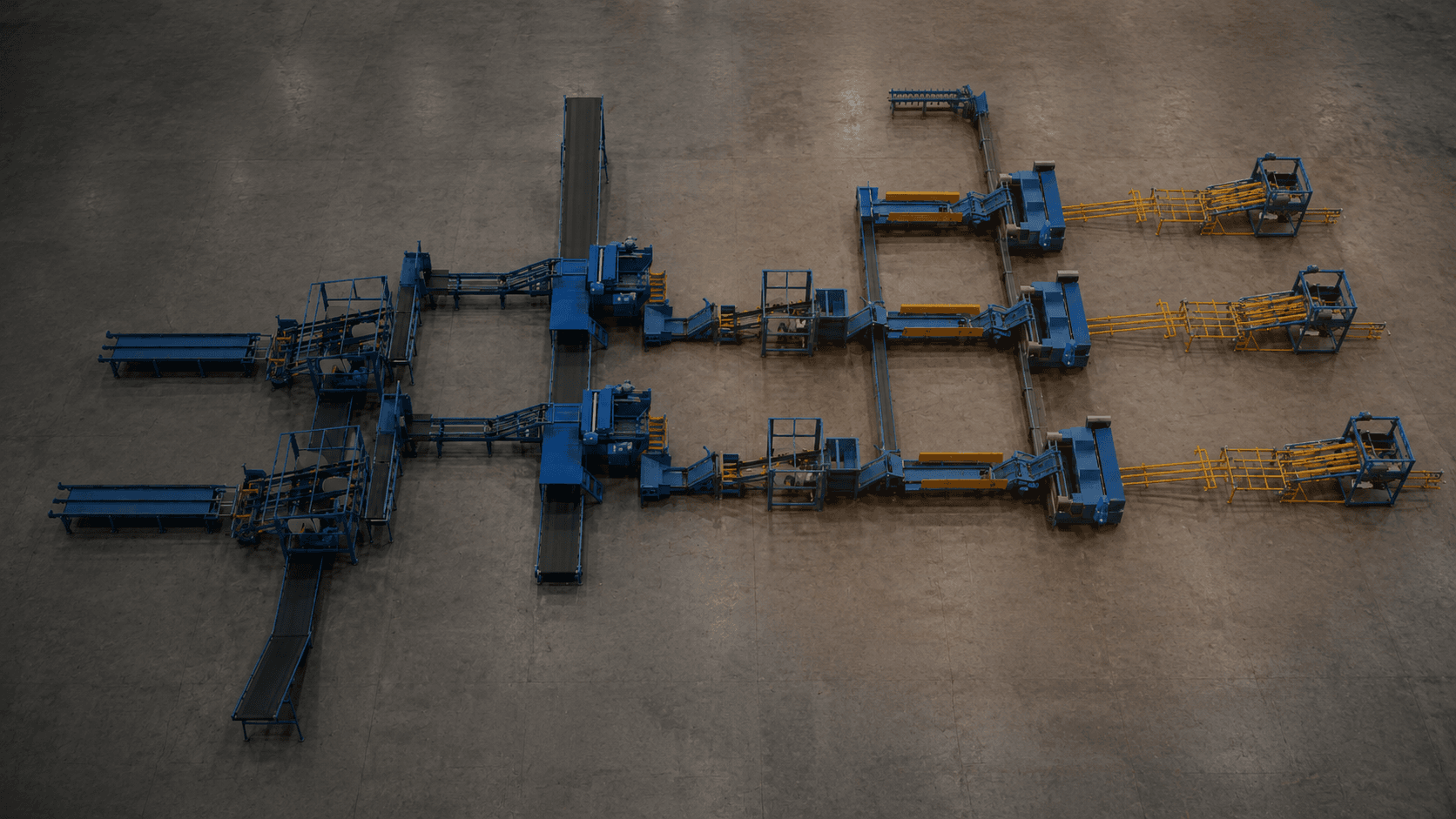
First assess whether the upstream feeding is stable
From log storage, cutting, and conveying through rounding or debarking, the key is not how fast a single piece of equipment is, but whether it can ensure a continuous feed to the peeling machine, minimizing downtime.
Also consider whether the rotary peeler is properly connected to the downstream process
After the sliced veneer exits the machine, conveying, veneer receiving and stacking, sorting, alignment, and pressing must form a stable, coordinated rhythm; otherwise, even if the front end speeds up, the back end’s manual veneer receiving and stacking will hold things back.
Finally, consider stacking and forklift transport
In the downstream section, an automatic veneer stacker or an integrated palletizing and stacking machine completes the sorting and stacking; the forklift routes, finished‑product yard, and aisle widths determine whether the entire line operates smoothly.