
Home
Contact us
Language
ChineseEnglishVietnamese
Complete line solutions

Smart veneer peeling plant production lineNot Just One Piece of Equipment

It is an integrated production solution tailored to the target product, timber availability, and plant conditions. Like assembling building blocks, various components can be combined to configure different lines, all with a single ultimate goal: smoother operations on the shop floor, more stable board output, and reduced material handling.

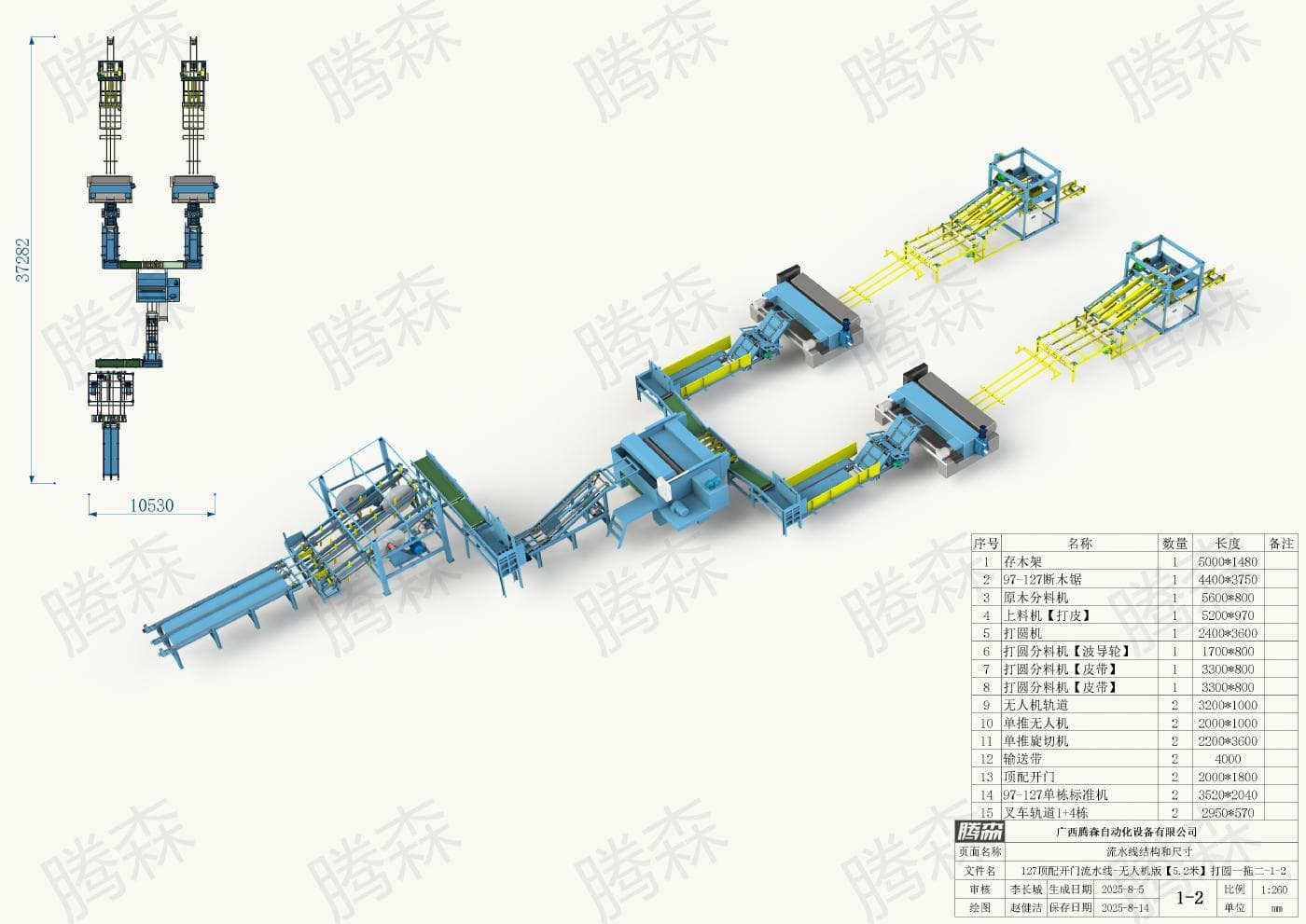
Veneer peeling plant—rendered image of the smart production line layout
Illustration: Drawings are produced based on site dimensions and equipment configurations, with the final plan subject to the survey report.
First, clarify the direction

The production line is not a fixed package; it is the optimal on‑site configuration.

When designing a production line, first determine the products you intend to manufacture and the quality standards you aim to achieve, then consider the plant layout, feed inlets, waste disposal, and sheet discharge points. Different objectives will lead to entirely different equipment configurations within the same facility.

SuitableConstruction of a new plantUpgrading and Replacing Outdated Equipment
01Target product
02Wood conditions
03Plant Conditions
04Equipment Combination
051: 1 Drawing
Two Common Examples

Although both are called assembly lines, their configurations can be entirely different.

The target is to process 127‑mm ecological panels, true three‑ply boards, and sorting.

The key is not merely to increase speed, but to first distinguish between different log diameters, board qualities, and downstream receiving methods.

  • Component with a large‑and‑small‑wood sorting system
  • Step‑Type Unmanned Startup
  • For round log machines, it is recommended to use a movable blade
  • For the peeling machine, dual‑roller push or pressure‑bar models are recommended

Target: mixed soft and hardwood, grade 97 general stock

The key is durability, smooth feed performance, and stable front-end material supply; first, ensure seamless integration of log splitting, feeding, and rough processing.

  • Heavy-duty log cut-off saw
  • Chain‑type single‑push unmanned startup
  • For the rounding machine, it is recommended to use a spiked roller with a coarser pattern.
  • Configuration of rear‑end palletizing and forklift traffic lanes
What we offer

In addition to peeling and rounding machines, production equipment components for veneer core plants are generally available.

Tengsen specializes in providing equipment components for production lines, including log splitting, material feeding, conveying, material sorting, board stacking, palletizing, waste‑material discharge, and sawdust handling. While Tengsen does not manufacture or sell peeling machines or edgers, it clearly specifies the interface requirements for these main units in its system designs to ensure seamless integration across the entire line.

What we can provide

Survey the site first, then draw up plans, and finally select equipment

Free On-Site Survey

We begin by inspecting the site—starting with the timber‑in area, the waste‑out area, the board‑out location, and the forklift lanes—rather than relying on guesswork to develop our plan.

Drawings produced on-site at a 1: 1 scale

Clearly depict equipment locations, board‑discharge directions, waste‑material flows, maintenance spaces, and access passageways to facilitate pre‑start confirmation.

Planning Feasible Even on Bare Land

Start design by considering column size, column count, ceiling height, and equipment placement—first aligning the plant and production line as a whole.

Worried about an unbalanced layout?

For complex sites, let the drawings be the first step toward resolution.

Tengsen has served over 5,000 enterprises and encountered a wide variety of irregular site conditions. Our on-site surveyors and drafting teams take into account equipment dimensions, site obstructions, and material‑handling flow paths, and our equipment can be custom‑sized to meet specific site requirements.

steep slopeMore than ten meters of elevation differenceWall Blocking the WayColumns Blocking EquipmentInsufficient Workshop HeightIrregular Plots of Land

Thousands of drawing cases are not just for show; they are meant to help avoid detours: where the wood enters, where the waste exits, how the forklift turns, and how equipment is maintained—everything must be clearly defined before work begins.

Preparation Before Consultation

Prepare these types of information first; the planning process will be much faster

  • Planning to produce in 97,121, or 127 specifications?
  • Major wood species, diameter range, and finished product orientation
  • Building dimensions, column grid, roof height, and floor elevation differences
  • Consider log entry points, waste discharge outlets, board exit locations, and forklift routes
Next step

Send us the target products and site conditions so we can first assess the layout.

Don’t rush to finalize equipment models. First align the line orientation, plant dimensions, and material‑inlet/outlet positions, then discuss specific configurations.

Submit proposal information